Start with what is on the ground now
Walk out to the area and look at it honestly. If it is grass, gravel or dirt, you need a new pour. If concrete is already there, check whether it has deep cracks, sunken sections or edges that rock underfoot. Those signs usually point to breaking it out and starting again. If the concrete is level and solid but looks tired, stained or dusty, a resurfacing or sealing job may be enough.
New concrete: matching the pour to the job
Driveways and the load they carry
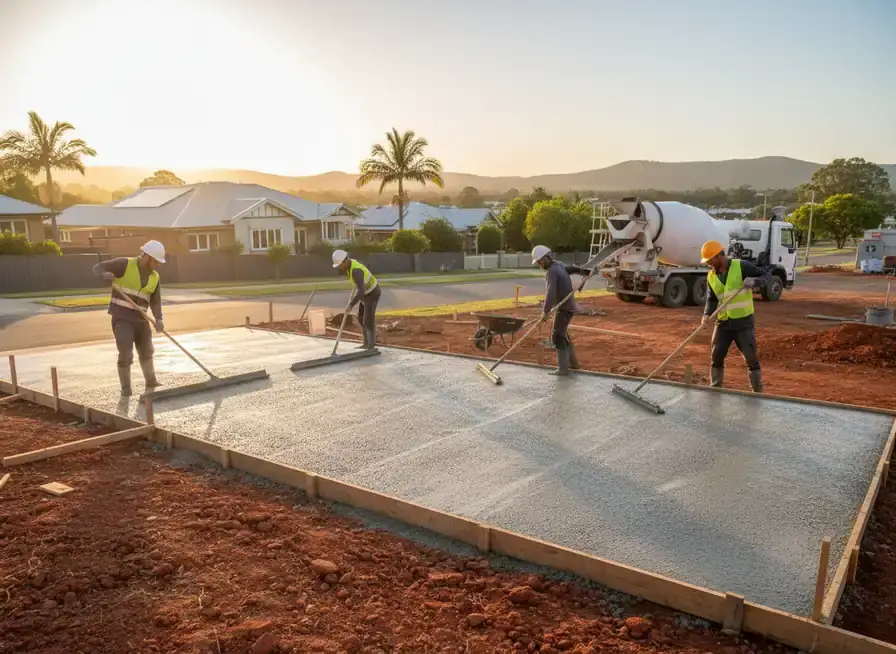
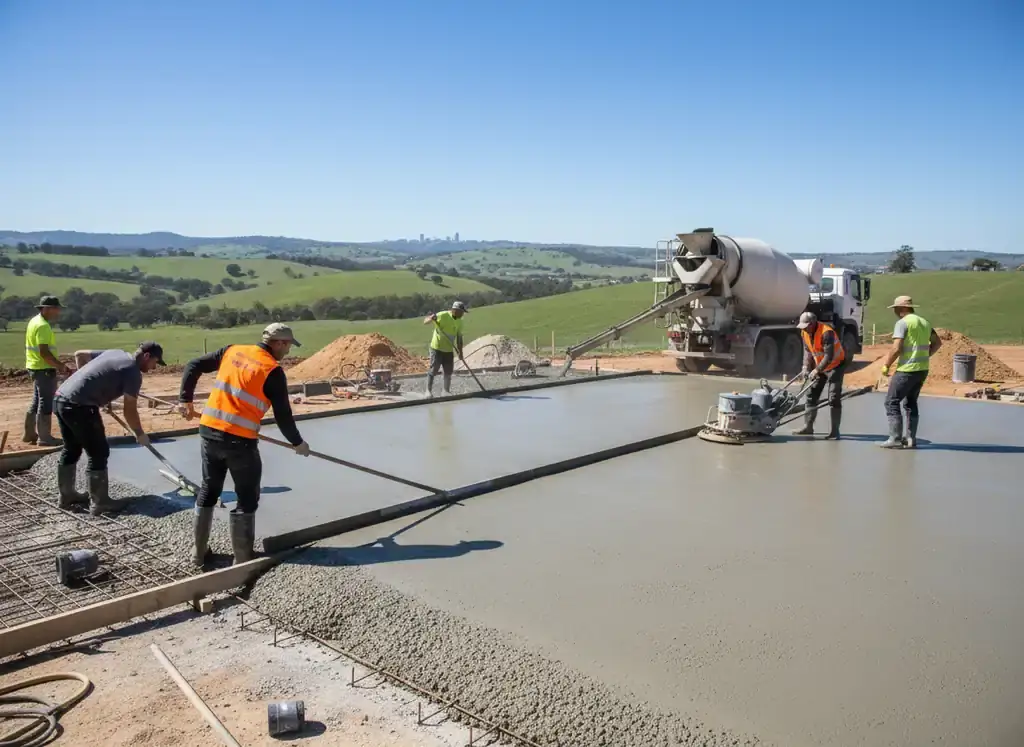
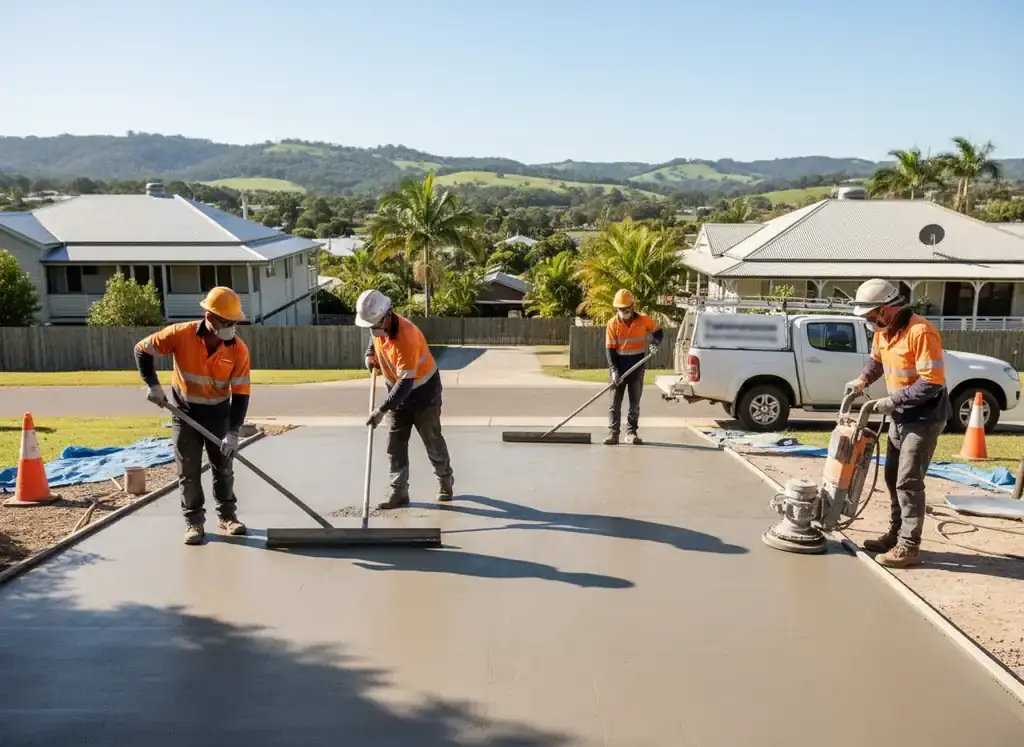
A driveway takes the weight of cars, trailers and sometimes a caravan or delivery truck, so its thickness, reinforcement and base preparation matter more than on most other surfaces. Think about the heaviest vehicle likely to use it over the next decade, not just the family car.
Slabs and footings for structures
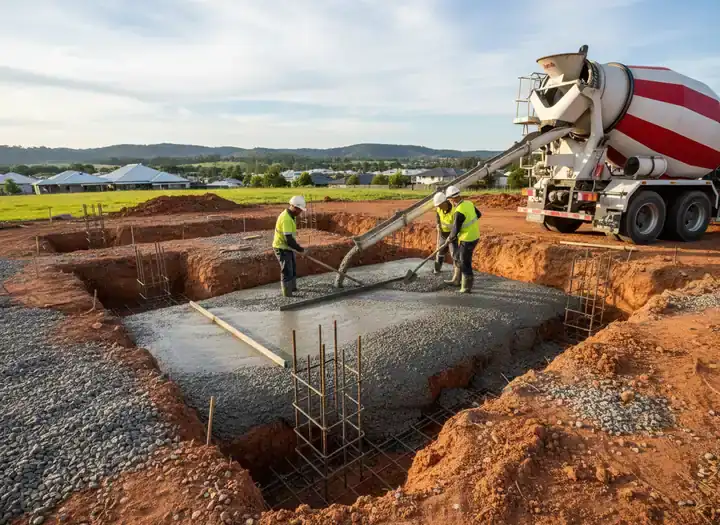
A slab for a shed, granny flat, carport or extension supports a building, and footings carry posts, walls or piers. These jobs are about strength and level, and they often tie in with plans for the structure itself. Have any drawings or engineering details ready when you ask for a price.
Paths and patios for everyday living
Paths and patios carry foot traffic, outdoor furniture and barbecues. Here, comfort and drainage count as much as strength: a gentle fall away from the house keeps water off your walls, and a slip-resistant finish helps around entries and outdoor areas.
Choosing a finish
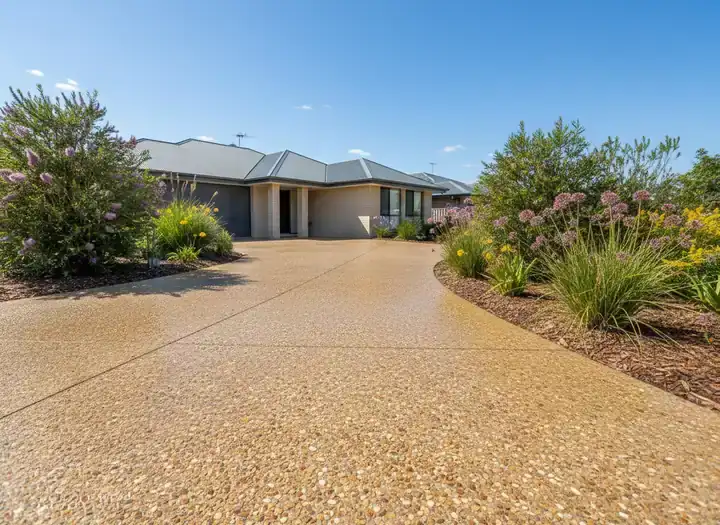
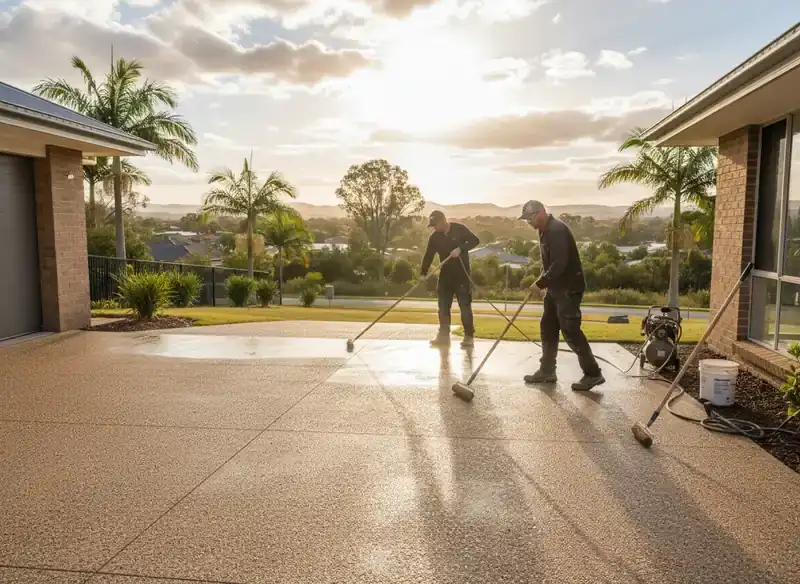
Plain broom-finished concrete is practical and hard wearing. Exposed aggregate shows the stones in the mix for a textured, decorative look that suits driveways, paths and pool surrounds. Decide on the finish before you get quotes, because it changes how the slab is poured and finished on the day.
Existing concrete: resurface, seal or replace
Resurfacing applies a new top layer over sound concrete to refresh its look and cover surface wear. Sealing protects concrete against stains, moisture and fading, and suits both new pours and older surfaces in good condition. Neither fixes structural movement. If slabs have dropped or cracked right through, replacement is usually the more honest answer.
Before work begins
Concreting jobs above $3,300 call for the right Queensland Building and Construction Commission concreting licence, and most residential jobs above that value also need Queensland Home Warranty Scheme cover arranged by the contractor. Any building approval remains the homeowner's job, whoever does the pour, so check what your project needs early. Ask any concreter you speak to to confirm their licence and insurance before you accept a price.
What to have ready for your quote
Measure the area's length and width in metres, and list awkward details like slopes, narrow side access or nearby trees. Photograph the job from a couple of angles, including any old concrete you want removed or refreshed. Add your preferred finish and the suburb, then choose the service card that best fits your job.