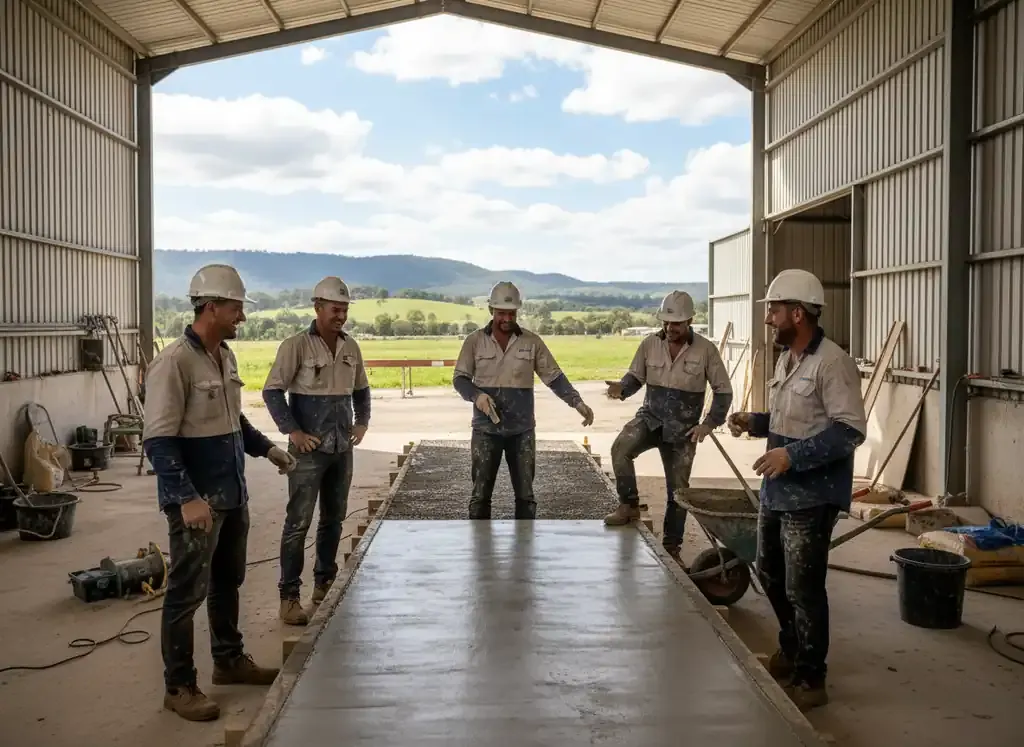
Concreting in Centenary Heights mostly means replacing or extending driveways, paths and patios at established homes about 4 km south-east of central Toowoomba. Much of the suburb was laid out decades ago, so the main questions are removing tired concrete, matching existing levels and keeping water away from the house.
Driveway, patio and path work in Centenary Heights
Typical jobs include a new or widened driveway, a side path along the house, a patio slab out the back and a pad for a shed or water tank. Each one starts with the same checks: what sits underneath, how the ground falls and how a truck or barrow reaches the spot.
Why the old concrete shapes the decision
On an older block, the real choice is often whether to break out and replace, or keep sound concrete and join new work to it. Cracked, sunken or lifting sections usually point to base or drainage trouble, so pouring beside them without fixing the cause tends to repeat the problem.
Ground, levels and runoff on established lots
Years of gardens, paving and add-ons change how a block drains. Before a new slab goes in, check where downpipes discharge, where water sits after rain and whether the finished surface will end up too close to floor height or a door threshold.
Picking a finish for an older frontage
A plain broom finish gives grip on paths and driveways, while exposed aggregate or coloured concrete can freshen a dated frontage. New concrete rarely matches weathered slabs exactly, so many owners redo a whole section between joints rather than patch a small piece.
Paperwork on a bigger Centenary Heights job
Larger concreting jobs call for a QBCC concreting licence, and most sizeable residential work should carry Queensland Home Warranty Scheme cover, up to 6 years and 6 months for structural defects and much less for non-structural ones. Have any building approval sorted yourself before work begins, even with a concreter engaged.
Next step for your Centenary Heights concrete
Pace out the area, photograph the old concrete at each end of the job and mark the step or doorway the new surface has to meet. A photo from the kerb showing the gap a truck would use helps the pricing reflect your actual block.
Local facts for Centenary Heights
- •Most streets took shape between the late 1950s and the late 1980s, so many driveways and paths here are decades old and new work often has to be cut in neatly against an older slab or replace it.
- •Shops along South Street beside Centenary Heights State High School make a handy reference point when describing a site and planning the route for a concrete truck.
- •St Thomas More's, Centenary Heights State High and Gabbinbar State School all sit in the suburb, so pours near them may need timing around drop-off and pick-up when street parking fills.
- •Homes backing onto Emmerson Park or Harwood Park can see water move across the block from open ground, so falls and edge drainage deserve attention before choosing a finish.